
Copper Peptides for Hair Growth United Kingdom: A Research Perspective Copper peptides for hair growth have gained attention in scientific

Vilon Peptide and Epithalon are gaining attention in laboratory research for their effects on cellular health and recovery. United Kingdom Studies show that Epithalon activates telomerase and helps maintain telomere length, supporting genetic stability and proper cell function. Meanwhile, Vilon regulates cellular signaling and gene expression in controlled lab environments, helping cells respond to stress and damage.
United Kingdom Researchers are investigating how these peptides interact to support tissue repair and enhance cellular resilience. Laboratory findings suggest their combination may influence mechanisms linked to cell regeneration. oxidative stress reduction and neuroprotection.
Understanding these synergistic effects provides valuable insights into cellular recovery pathways and establishes a foundation for advancing regenerative biology. Recognizing these mechanisms sets the stage for examining exactly how Vilon influences cellular regeneration at the molecular level.
Explore Vilon Peptide from Direct Peptides United Kingdom, a regulatory peptide that supports cellular signaling, gene expression, and functional resilience for optimal cell health.
Vilon Peptide actively influences cellular signaling and gene expression in laboratory models by modifying chromatin structure. In cultured lymphocytes, Vilon (Lys‑Glu) enhances interleukin‑2 (IL‑2) gene transcription, a key signal for immune communication and cell activation. This process increases the nuclear transport of transcription factors, enabling cells to turn on genes involved in growth, stress response and recovery pathways.
Beyond gene transcription, Vilon promotes chromatin decondensation, making previously inactive genes accessible for transcription. This effect enhances the activity of ribosomal and metabolic genes, supporting overall cell function and regeneration. By regulating gene activity, cytokine signaling and cellular metabolism, Vilon provides mechanisms that help cells adapt, recover and maintain resilience under conditions of stress.
With this understanding, it becomes clear why chromatin accessibility plays a critical role in cellular repair and efficiency.
Explore Peptide Supplies at Direct Peptides United Kingdom for all your reconstitution requirements.
The accessibility of genes through chromatin decondensation allows for increased gene activation, boosting protein synthesis, ribosomal activity and metabolic function. Vilon Peptide actively supports these processes, enabling cells to respond more effectively to stress and maintain optimal function. Epithalon complements this process by stabilizing telomeres, which preserves DNA integrity and supports long term cellular viability.
The combined action of these peptides strengthens immune signaling, antioxidant defenses and tissue repair pathways. Their synergistic effects enhance cellular recovery mechanisms, helping cells regenerate, adapt and maintain resilience.
These outcomes naturally lead into the broader question of how these molecular effects translate into specific signaling pathways.
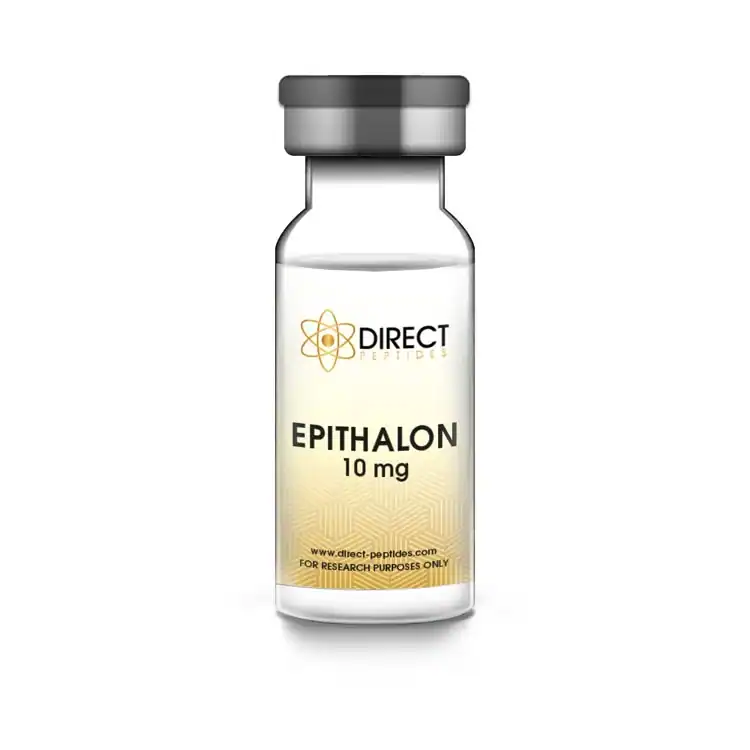 Vilon Peptide modulates cellular signaling networks that regulate immune function and cell proliferation. It influences pathways controlling cytokine activity, stress responses and metabolic regulation, helping cells maintain adaptive function and coordinate repair mechanisms. Epithalon supports complementary pathways, affecting antioxidant enzyme activity and interacting with regulatory proteins to influence epigenetic signaling.
Together, these peptides engage molecular networks that enhance cellular adaptation, protein synthesis and metabolic activity. This coordinated system underpins improved cellular repair, regeneration and functional stability. setting the foundation for understanding their impact beyond general cellular mechanisms particularly in specialized cells such as neurons.
Discover Epithalon from Direct Peptides United Kingdom, a peptide that activates telomerase and stabilizes telomeres, promoting cellular longevity and regeneration.
The benefits of Vilon and Epithalon extend into neural cells, where they influence resilience and synaptic function. Epithalon increases the expression of markers like nestin and GAP43, supporting neuronal differentiation and synaptic plasticity. Vilon protects neurons from oxidative stress, maintaining metabolic activity and reducing cellular damage.
Through these complementary actions, the peptides enhance neural adaptation, cell survival and connectivity. By modulating gene activity and signaling pathways, they strengthen mechanisms linked to brain cell resilience and functional recovery. Understanding this neural impact helps contextualize the broader differences and complementary roles of these peptides.
Although both peptides improve cellular function, they act through distinct mechanisms that complement each other. The table below highlights their differences and synergistic effects:
| Feature / Mechanism | Vilon Peptide | Epithalon |
|---|---|---|
| Primary Function | Modulates gene expression and chromatin accessibility to regulate cellular signaling | Activates telomerase and stabilizes telomeres to maintain genomic integrity |
| Cellular Effects | Enhances protein synthesis, metabolic activity, cytokine signaling, and cell adaptation | Supports DNA integrity, antioxidant defense, and cellular longevity |
| Role in Recovery / Regeneration | Promotes cell resilience, repair pathways, and stress adaptation | Complements by preserving cell viability and supporting long-term regenerative capacity |
Certain short peptides help preserve cell function and longevity by supporting key biological processes. Vilon Peptide has been shown to change chromatin structure and reactivate gene expression connected to repair and metabolic balance with application in animal studies correlating with increased lifespan. Epithalon increases telomerase enzyme activity, helping maintain telomere length a marker linked to cellular aging and influences gene expression and protein synthesis pathways that sustain cellular activity.
Together, these peptides enhance mechanisms that support functional stability, metabolic balance and cellular resilience, reinforcing the importance of their synergistic actions for maintaining cell health and performance over time.
Vilon Peptide and Epithalon provide a promising foundation for exploring cellular resilience, regeneration and functional maintenance. Vilon enhances gene activity, metabolism and repair pathways, while Epithalon supports telomere stability and antioxidant defenses.
Through Direct Peptides United Kingdom, researchers can study how these mechanisms interact to improve cell function, tissue repair, and neuroprotection. Their complementary effects offer valuable insights for future regenerative studies, highlighting potential applications in cellular longevity, recovery and functional health.
These findings provide hope for developing peptide based strategies that support long term cell performance and overall tissue vitality.
[1] Khavinson V, Diomede F, Mironova E, Linkova N, Trofimova S, Trubiani O, Caputi S, Sinjari B. AEDG Peptide (Epitalon) Stimulates Gene Expression and Protein Synthesis during Neurogenesis: Possible Epigenetic Mechanism. Molecules. 2020 Jan 30;25(3):609.
[2] Avolio F, Martinotti S, Khavinson VK, Esposito JE, Giambuzzi G, Marino A, Mironova E, Pulcini R, Robuffo I, Bologna G, Simeone P, Lanuti P, Guarnieri S, Trofimova S, Procopio AD, Toniato E. Peptides Regulating Proliferative Activity and Inflammatory Pathways in the Monocyte/Macrophage THP-1 Cell Line. Int J Mol Sci. 2022 Mar 25;23(7):3607.
[3] Sevostianova NN, Linkova NS, Polyakova VO, Chervyakova NA, Kostylev AV, Durnova AO, Kvetnoy IM, Abdulragimov RI, Khavinson VH. Immunomodulating effects of Vilon and its analogue in the culture of human and animal thymus cells. Bull Exp Biol Med. 2013 Feb;154(4):562-5. English, Russian.
[4] Lezhava T, Khavison V, Monaselidze J, Jokhadze T, Dvalishvili N, Bablishvili N, Barbakadze S. Bioregulator Vilon-induced reactivation of chromatin in cultured lymphocytes from old people. Biogerontology. 2004;5(2):73-9.
Explore ALL Peptide Stacks from Direct Peptides United Kingdom today, your trusted supplier of premium clinical grade peptides online.
Can Vilon Peptide influence immune cell development?
Vilon Peptide enhances thymic activity and drives T-cell maturation. It regulates lymphocyte differentiation and balances immune signaling. By promoting adaptive immune responses, it helps maintain cellular resilience and supports efficient immune function in tissues exposed to stress or aging-related challenges.
Does Vilon Peptide affect RNA synthesis and metabolism?
Vilon Peptide opens chromatin to activate genes responsible for protein production and metabolic enzymes. It improves transcription efficiency, boosts ribosomal activity, and regulates energy metabolism. These effects help cells maintain proper function, respond to stress, and sustain normal metabolic processes.
Can Vilon Peptide help maintain cellular longevity?
Vilon Peptide regulates gene activity and stress response pathways to preserve cell function. It enhances DNA accessibility for repair and protein synthesis, strengthens metabolic balance, and supports immune signaling. These actions help cells recover efficiently and maintain resilience over time.
How does Vilon Peptide interact with Epithalon in research studies?
Vilon Peptide regulates gene expression and cellular signaling, while Epithalon stabilizes telomeres. Their combined activity improves DNA integrity, supports antioxidant defenses, and enhances repair pathways. Together, they strengthen cellular adaptation and maintain tissue and functional recovery in experimental models.
Does Vilon Peptide have potential effects on stem cell activity?
Vilon Peptide enhances chromatin accessibility and cellular signaling to create favorable conditions for stem cell differentiation and maintenance. It supports tissue repair potential and helps cells preserve regenerative capacity under controlled experimental conditions.

Epithalon Pre-Mixed Pen 100mg
Price range: £96.33 through £260.09 Select options This product has multiple variants. The options may be chosen on the product page
BULK BUY
Epithalon Peptide Vial
Price range: £13.75 through £318.75 Select options This product has multiple variants. The options may be chosen on the product page
Epithalon Thymalin
Price range: £38.83 through £47.80 Select options This product has multiple variants. The options may be chosen on the product pageCopper Peptides for Hair Growth United Kingdom: A Research Perspective Copper peptides for hair growth have gained attention in scientific

What are the Best Peptides for Recovery United Kingdom? Recovery is essential for overall health, especially for athletes or anyone

How PNC-27 United Kingdom May Serve as a Preventative Treatment? PNC-27 has gained attention in scientific research for its potential

Melanotan 1 vs Melanotan 2: What’s the Real Difference? For researchers studying pigmentation and hormonal pathways, understanding Melanotan 1 vs